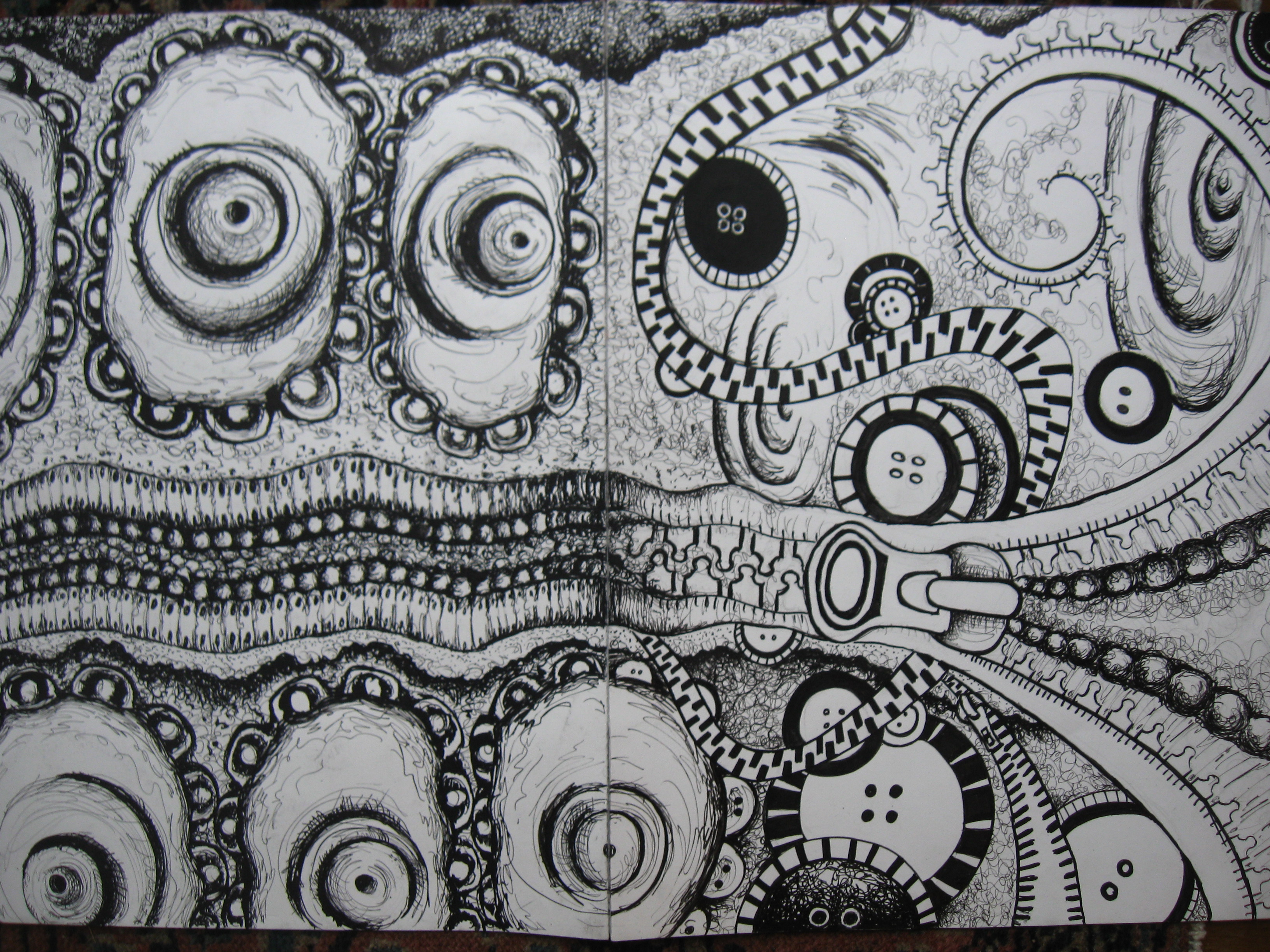
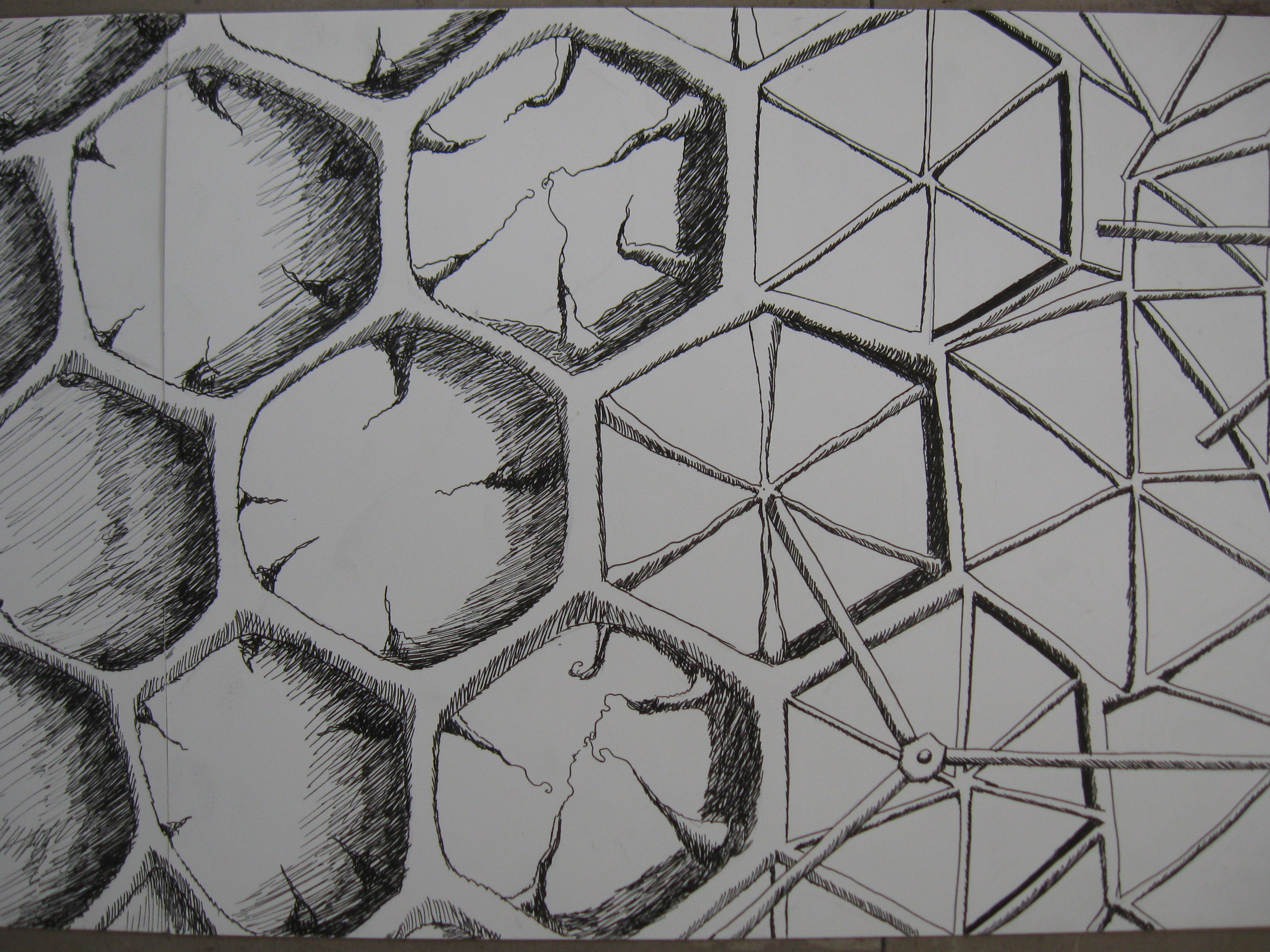
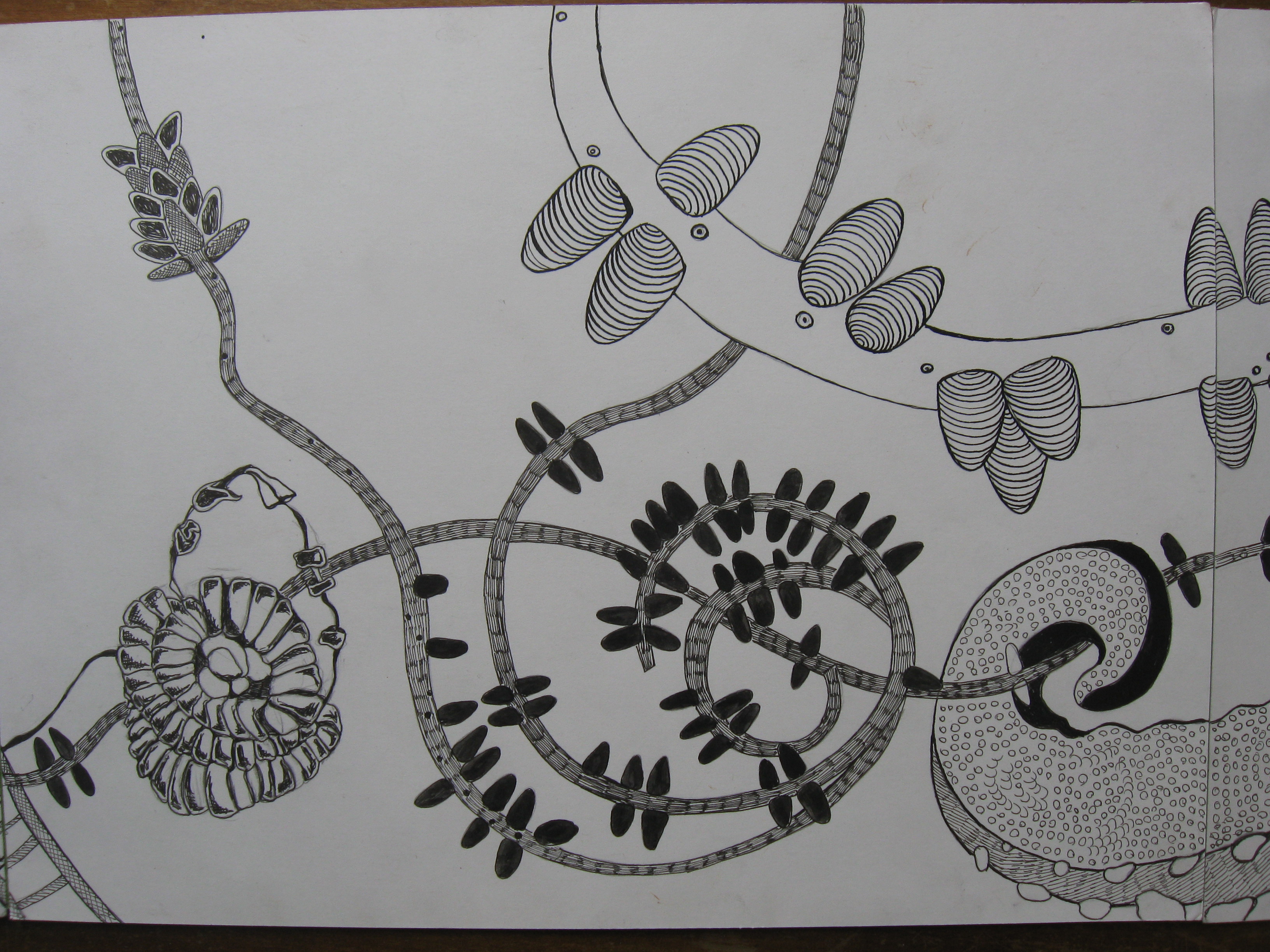
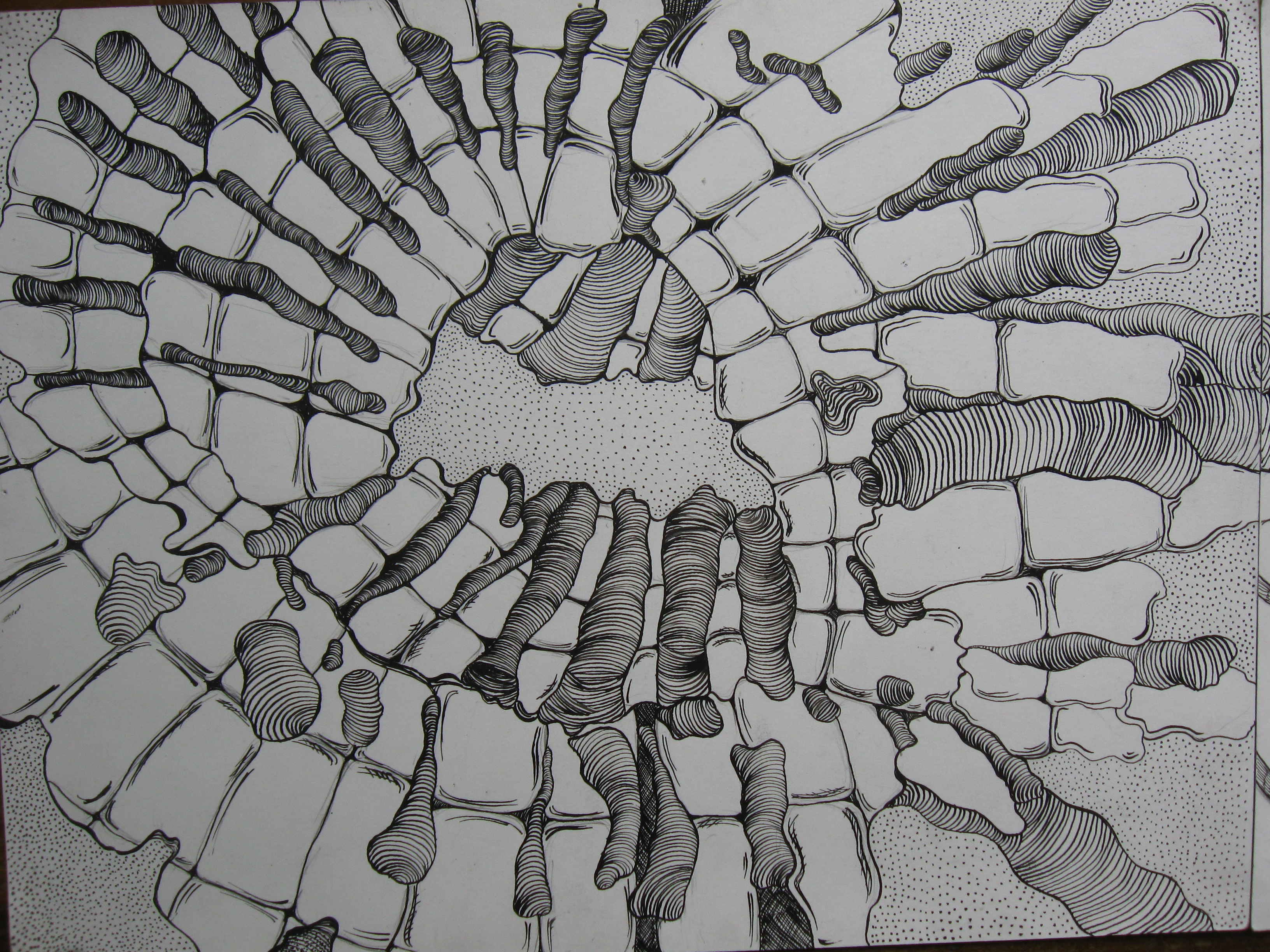
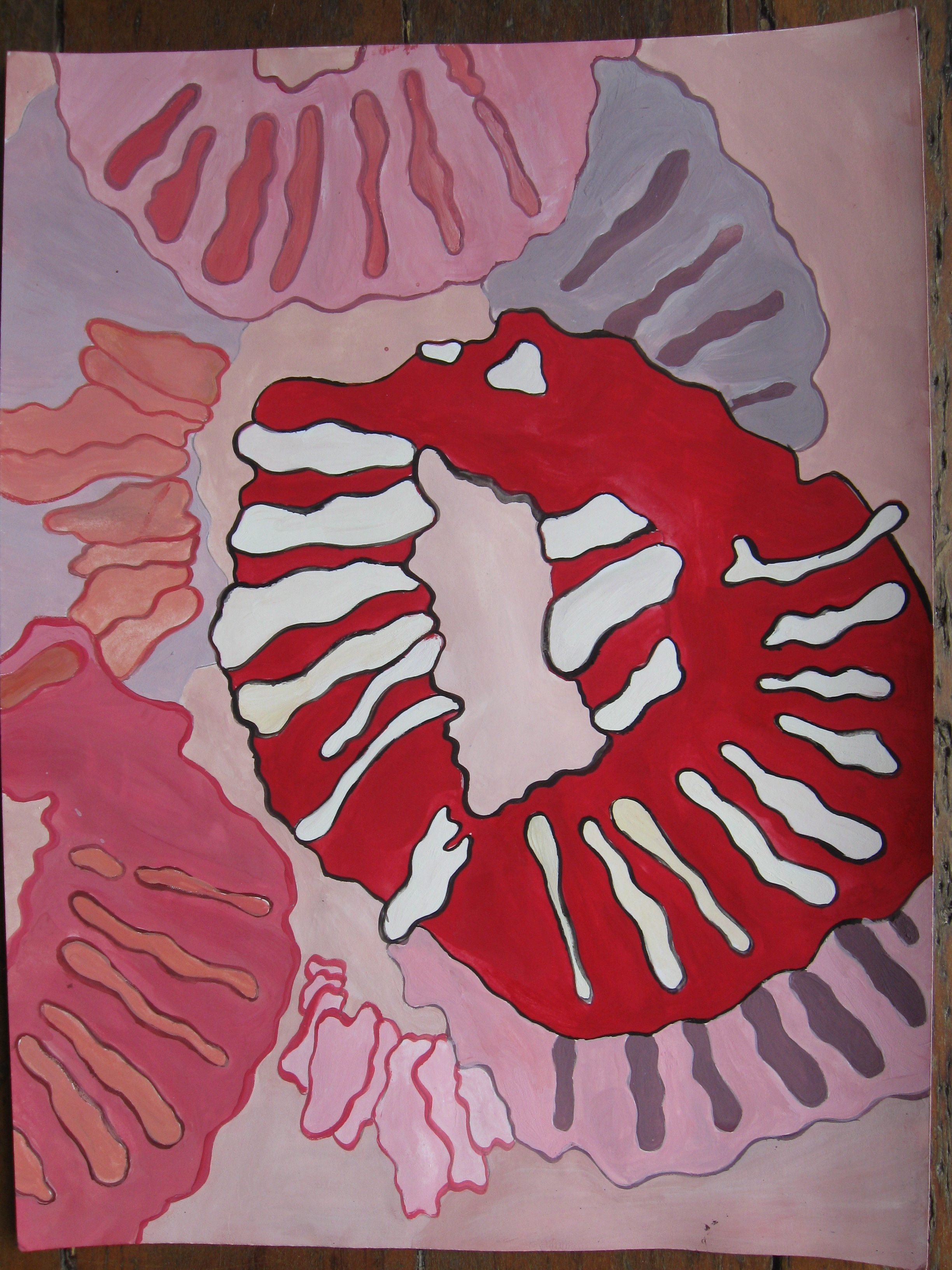
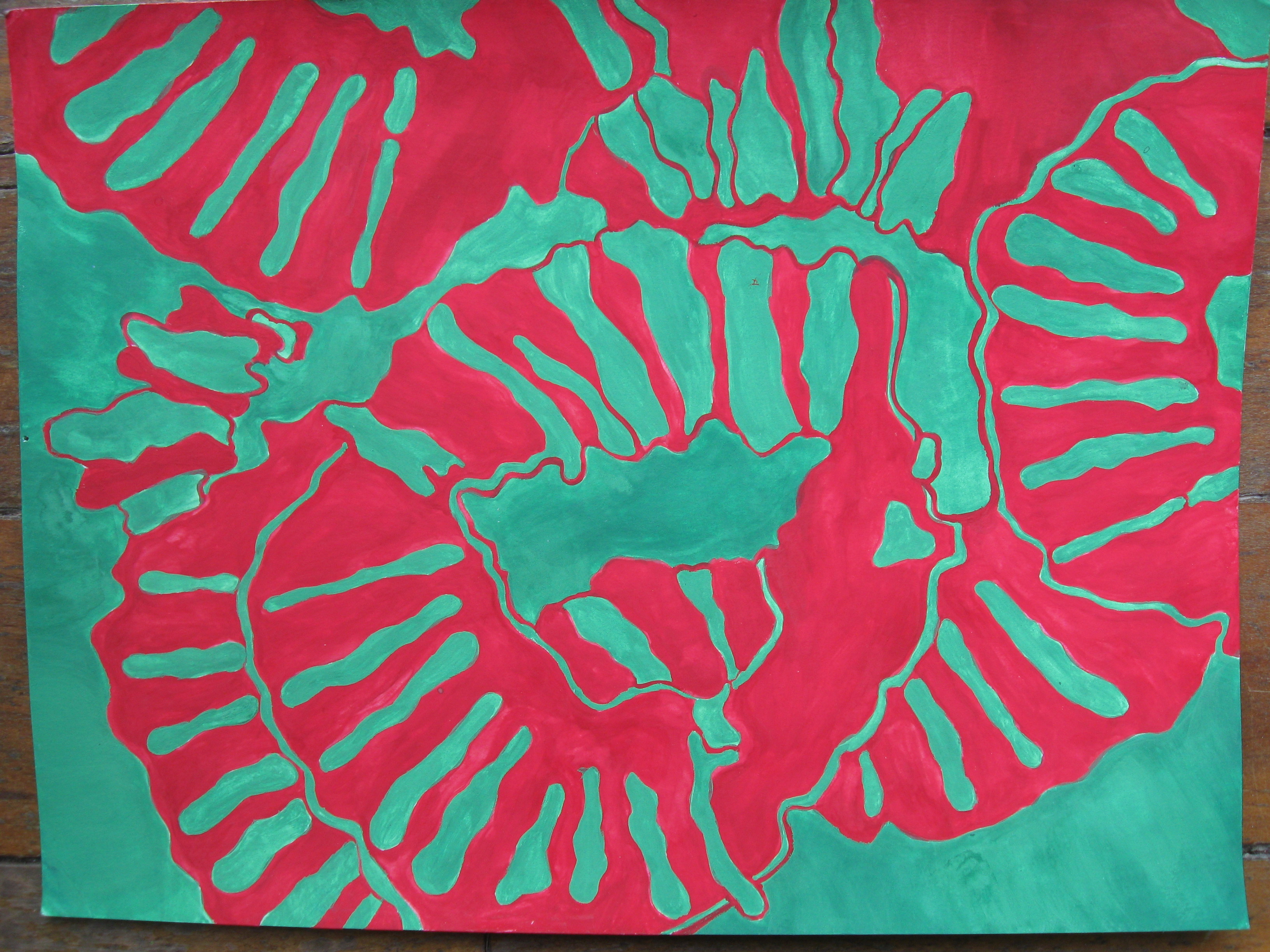
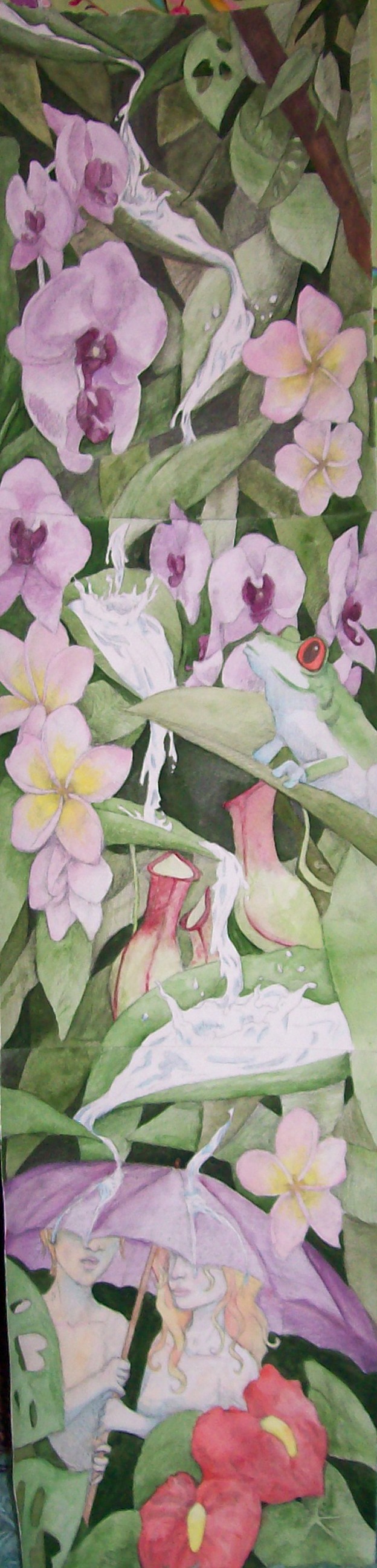
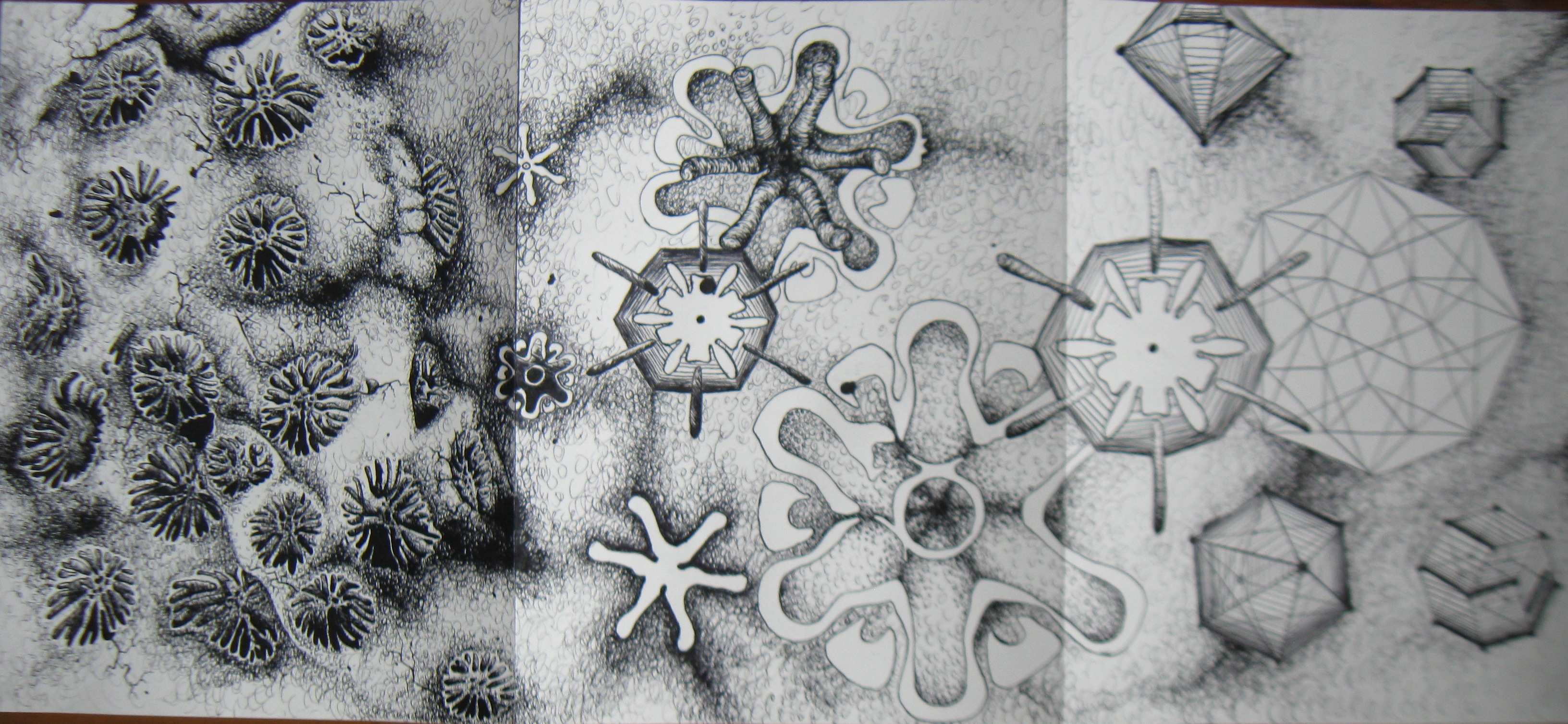
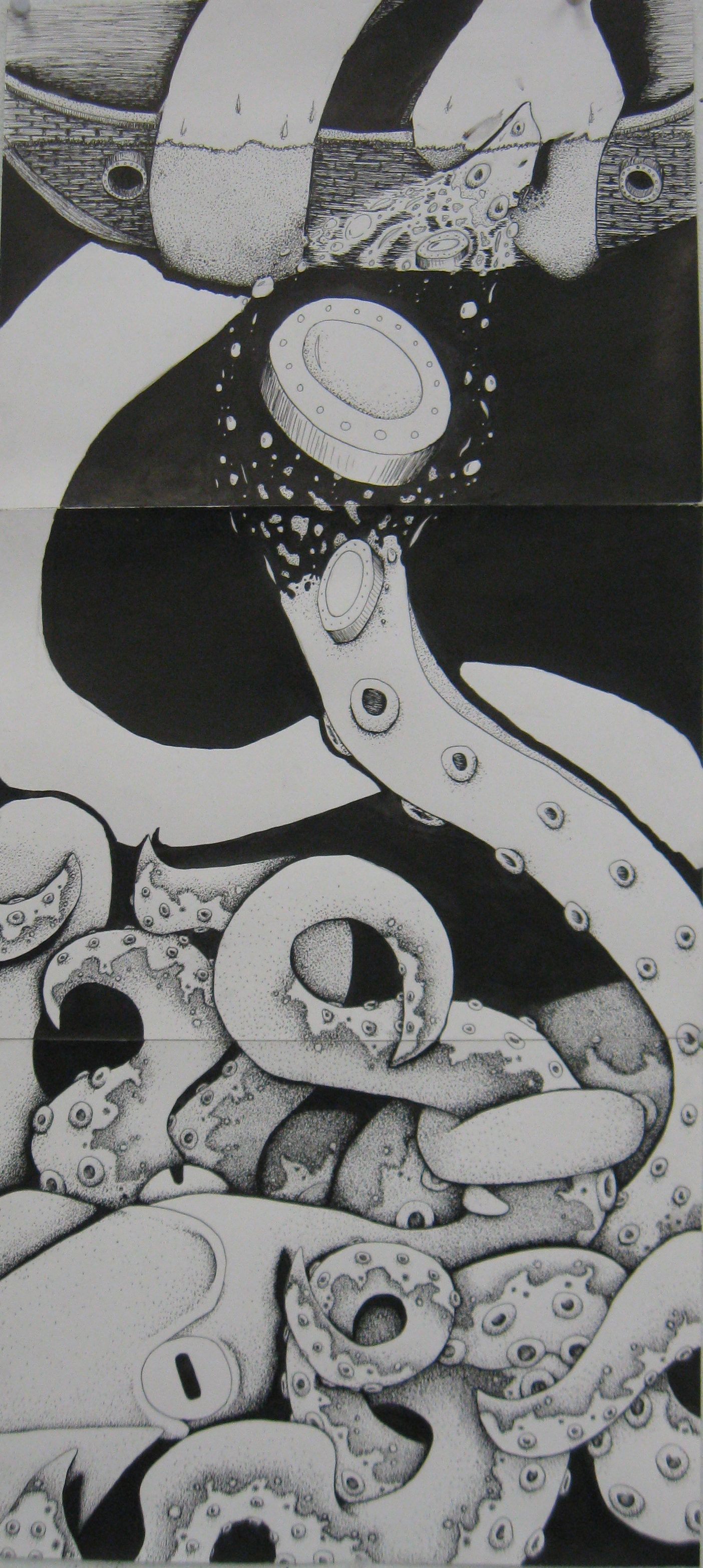
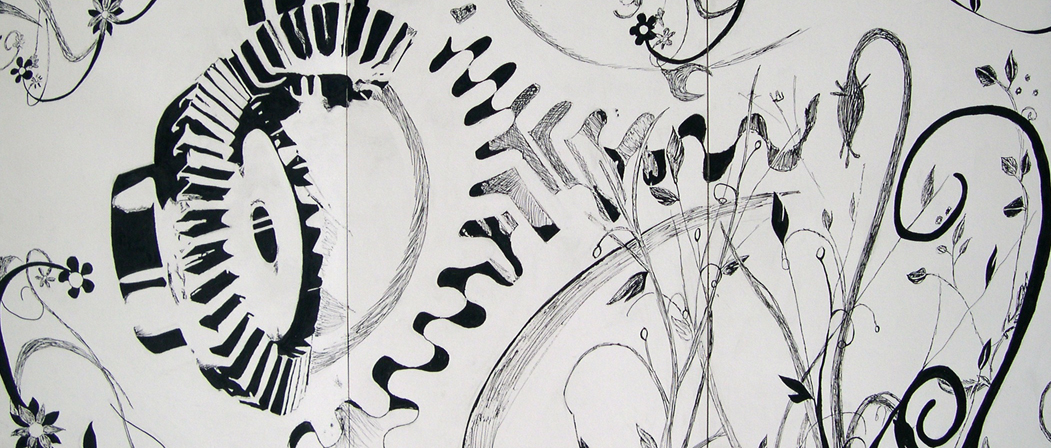
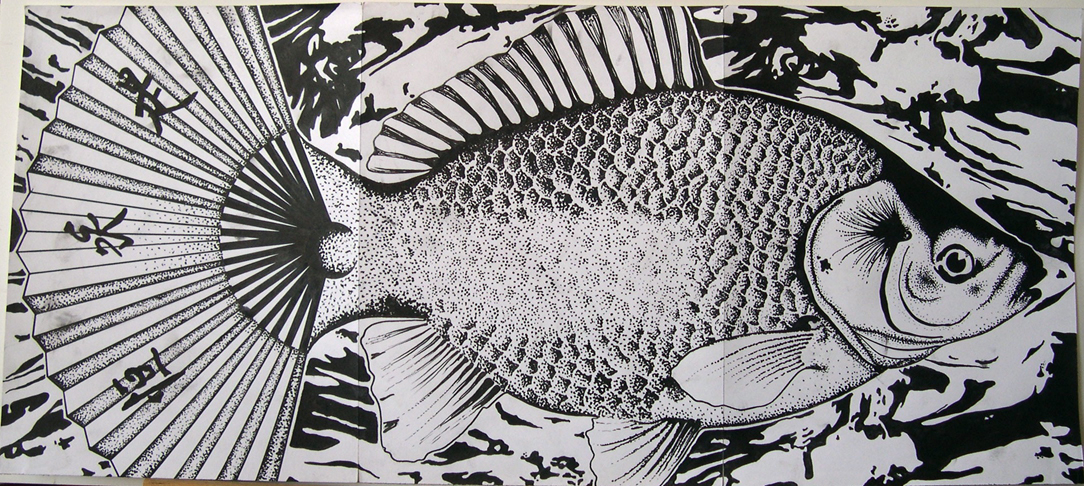
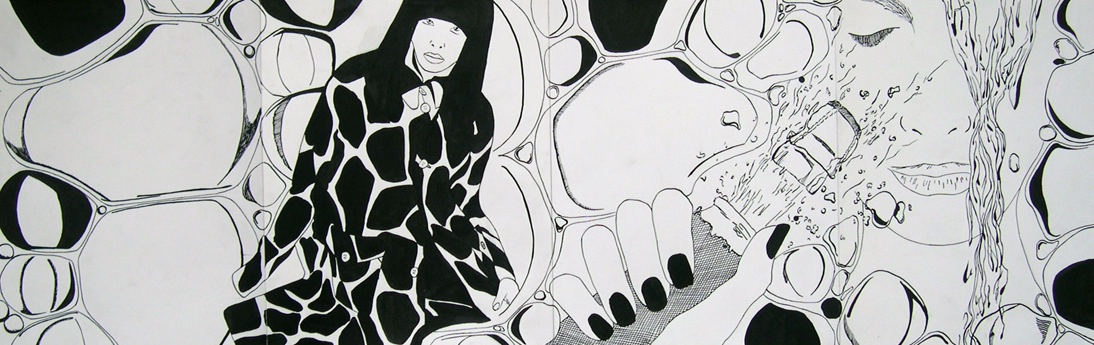
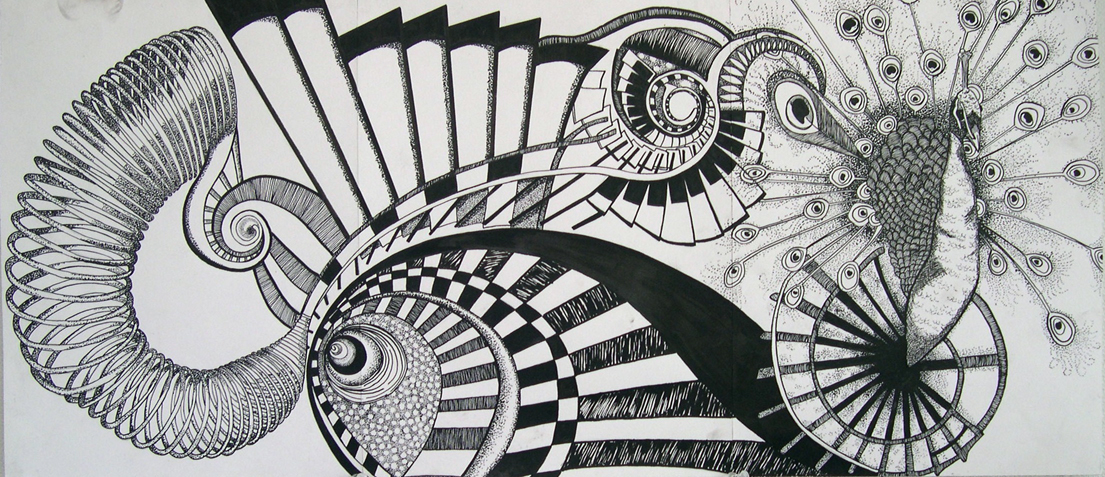
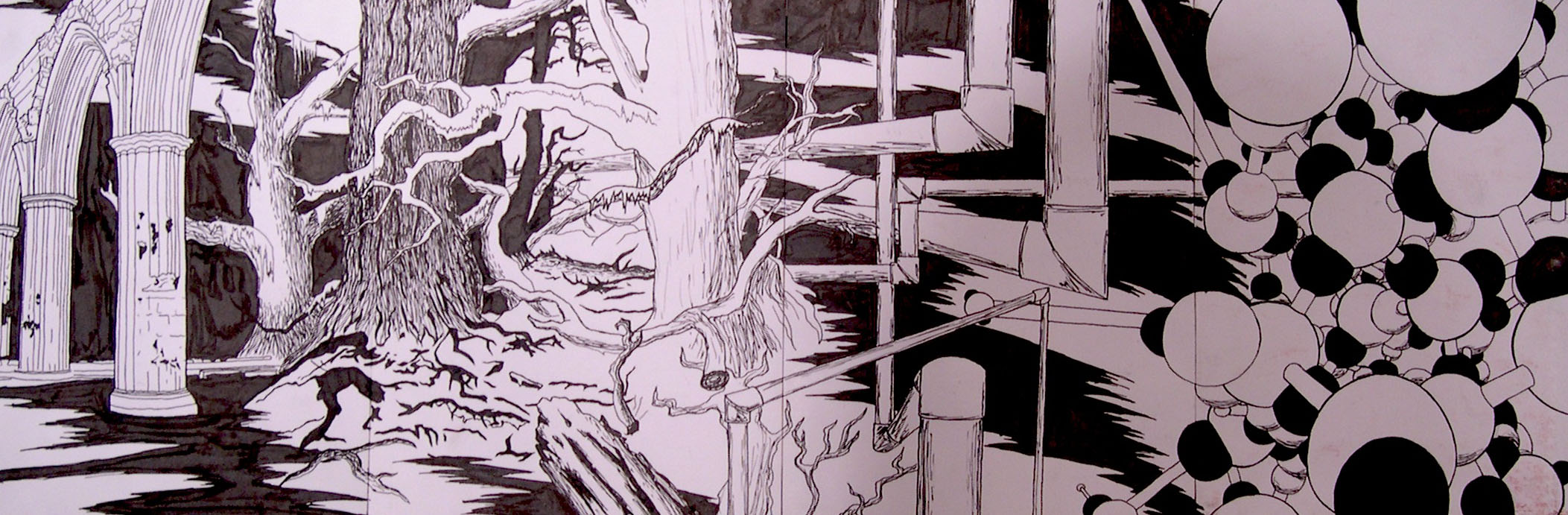
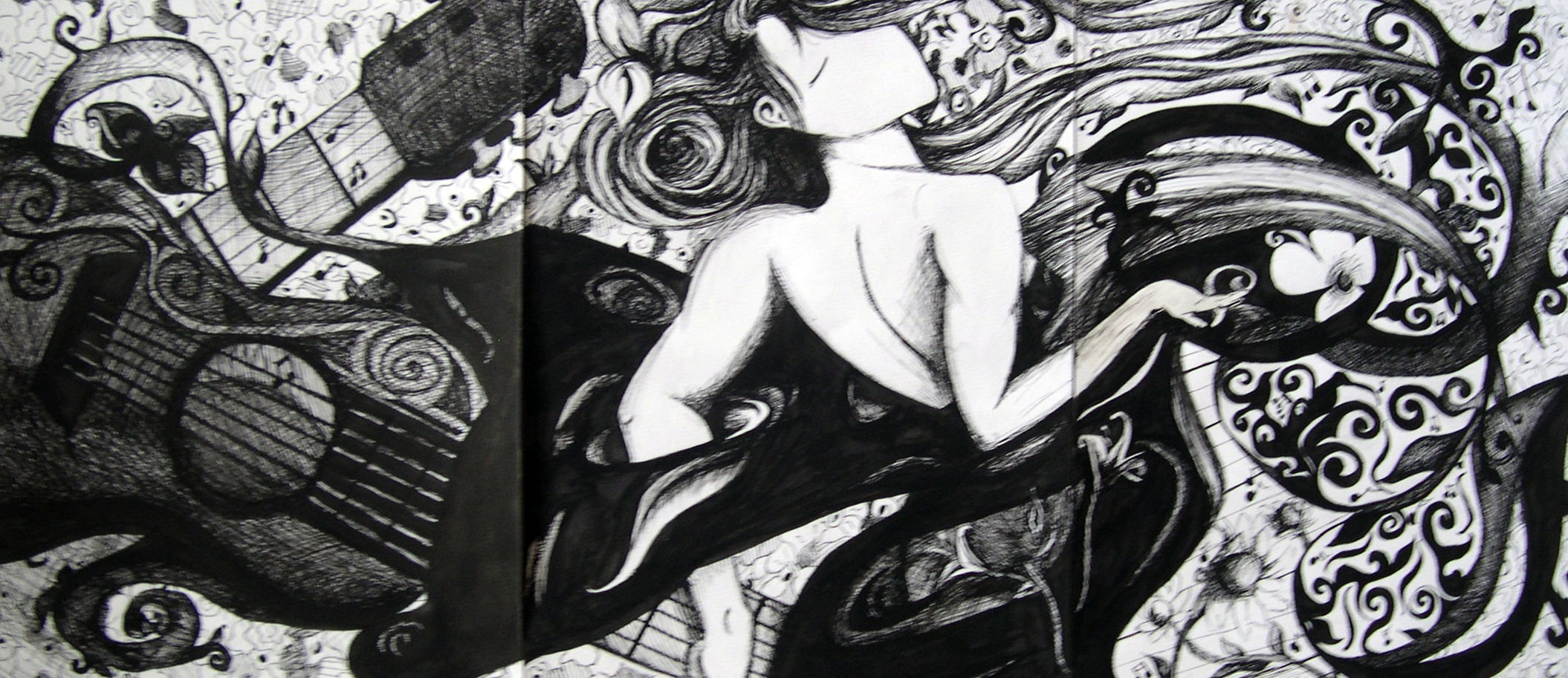
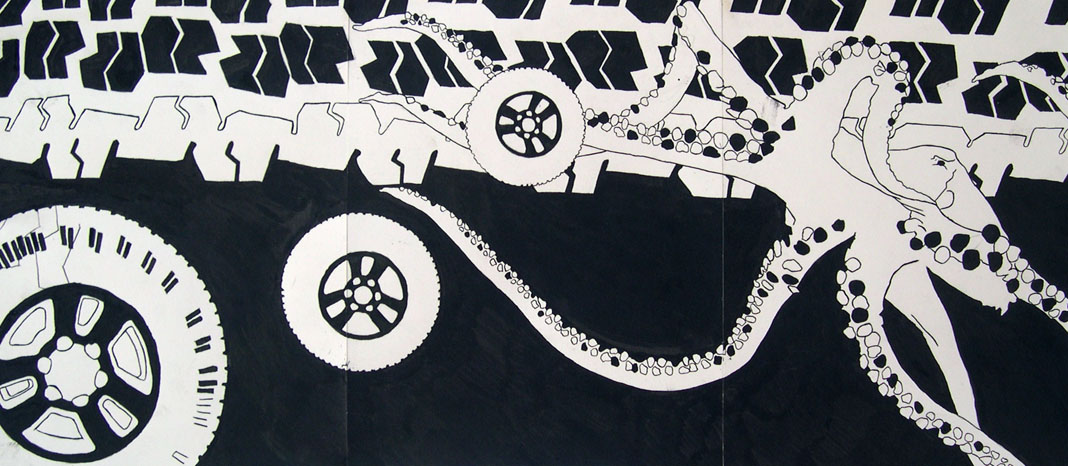
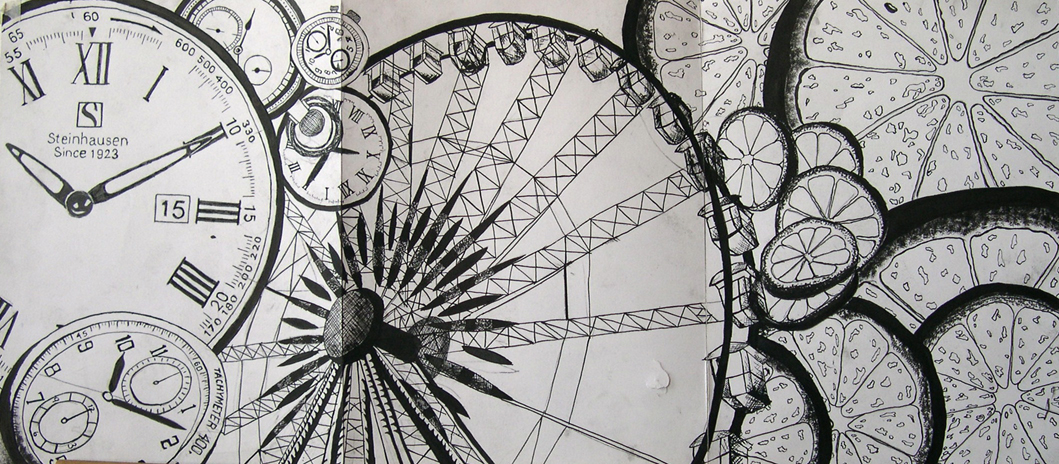
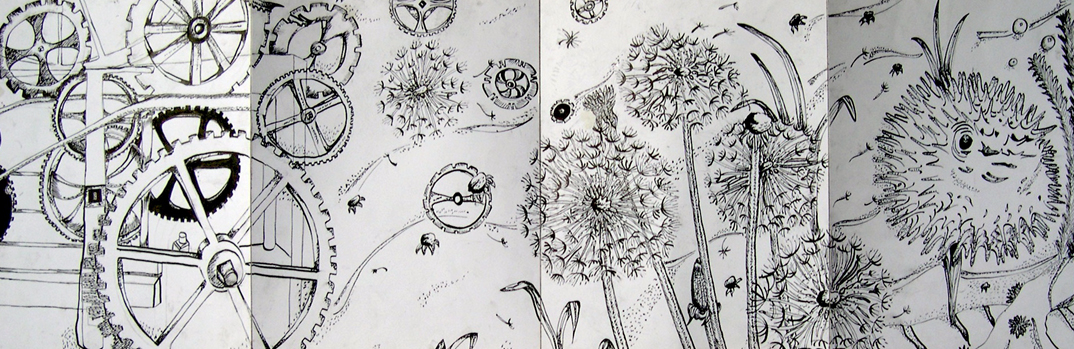
Triptych with Progressive Rhythm: Biomimicry Design 2D: Aston
Size and Medium: 12”(vertical) x 27 (horizontal)” Ink on paper in vertical format.
You will need tracing or carbon paper, tape, black ink, pens and assorted nibs, and a collection of 8.5”x 11” high resolution photocopied images at various enlargements.
Objectives:
* To create a triptych (3-part artwork) based on the theme of Nature/Culture. Imagery will explore relations between natural, biomorphic forms and man-made structures or patterns. *
* To design a progressive sequence of forms or patterns using the principles of Rhythm, Repetition, and Variation.
* To experiment with markmaking in the creation of textural illusion and greyscale values.
* To use Line, Shape and Form in the creation of positive and negative areas with pen and ink.
* To investigate the visual / graphic design applications of biological design (Biomimicry).
* To research visual design ideas using cameras, scanners, photocopiers, books and the internet.
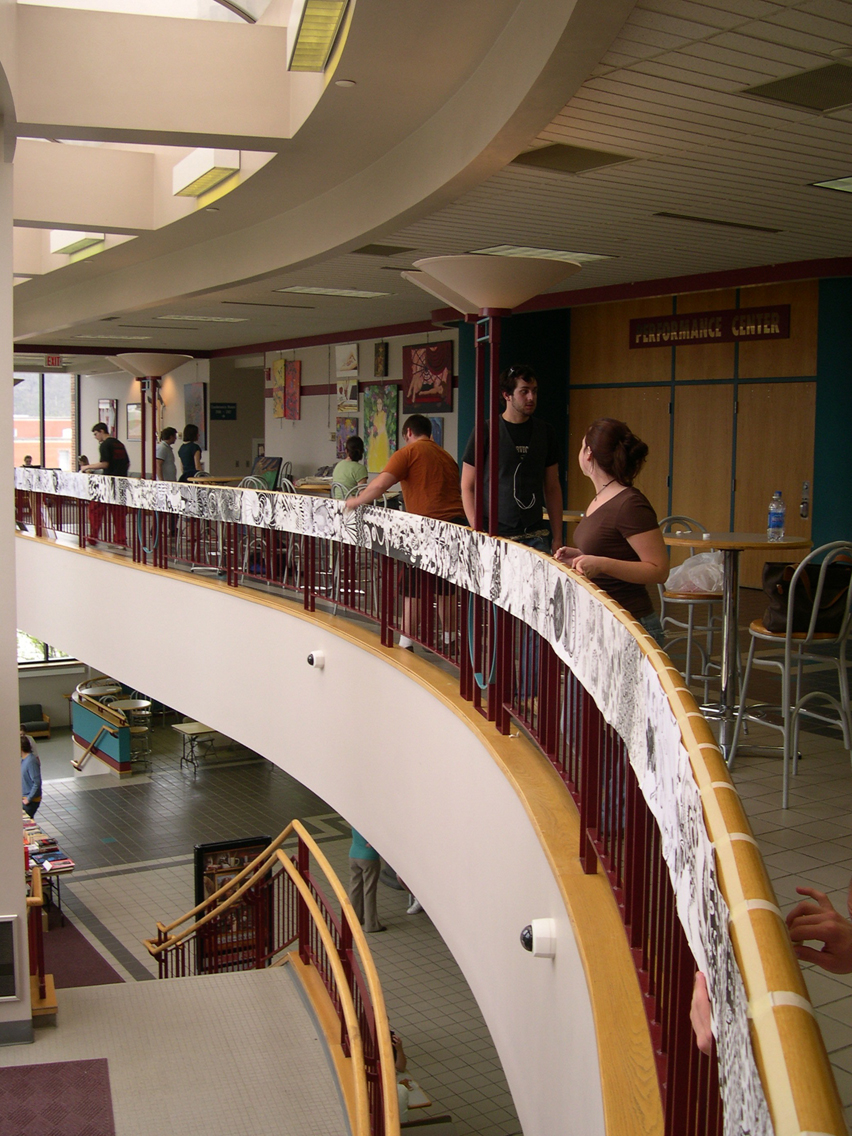
* To collaborate with classmates in the arrangement and exhibition of a series of linked designs, and to advertise and organize a group exhibition in the student gallery.
Instructions
*Design a triptych using similar repeating forms or patterns that spans three adjoining frames. Your objective is to create a flowing rhythm that moves through space as the images change from natural to man-made. You may use as many pages as necessary.
*For this project you will need to use a scanner or digital camera to photograph objects, or you may conduct research at the library or on the internet. (If you appropriate a photograph that is not your own, you must cite the source.) At least a dozen images should be collected and photocopied at various enlargements. At least one image must depict a natural form or pattern, and at least one must be a man-made object.
*Choose a minimum of 2 image sources that have visual affinities, similar shapes, patterns, or constructions, and modify the edges to create a progressive rhythm of flowing images. Reduce or enlarge images to create smooth transitions.
*Once the composition is sketched out in pencil, trace the images onto the papers and copy in ink with pen and ink.
*At least one area of the design must create the illusion of 3-D form. The rest may remain as pure line and shape.
*Tape the compositions edge to edge on the back of paper with masking tape to form a long 3-4 page horizontal or vertical composition.